Hua Wang

Ph.D. student, Peking University

School of Computer Science · Open Lab on Human Robot Interaction

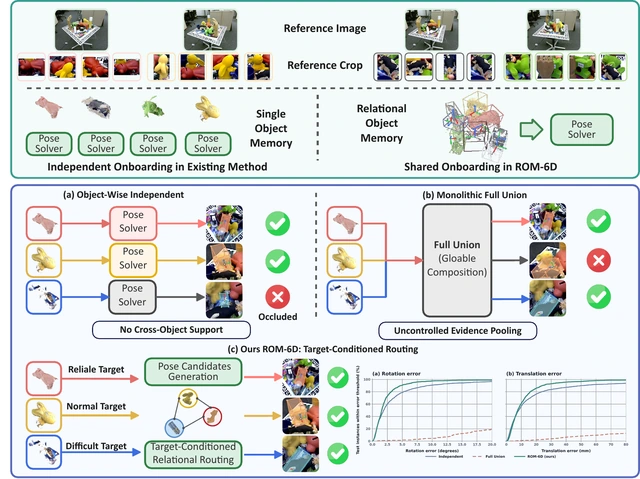
My research focuses on 3D perception, world-action models, and simulation for embodied AI, aiming to connect scene understanding with robotic manipulation. I study geometric and semantic representations for 6D object pose estimation, including generalization to unseen objects and the use of relationships between objects. I also build language-guided simulation pipelines for synthetic data generation and develop perception-guided dexterous grasping prototypes on real robots.

Open to research internships in world models and embodied AI.

Hua Wang by the sea

Selected publications

Real-robot manipulation with a skeleton overlay (left) and the corresponding 3D skeleton visualization (right).

SkeleWAM: Skeleton World-Action Modeling for Efficient Robotic Manipulation

Learning robot actions and future geometric states from sparse 3D robot–object skeletons. The model achieves 85.9% success on LIBERO-Plus with 57.1M parameters.

My contribution: simulation setup, training and tuning, robustness evaluation, ablations, analysis, writing, and technical figures. The metrics above are team paper results.

Accepted papers (forthcoming)

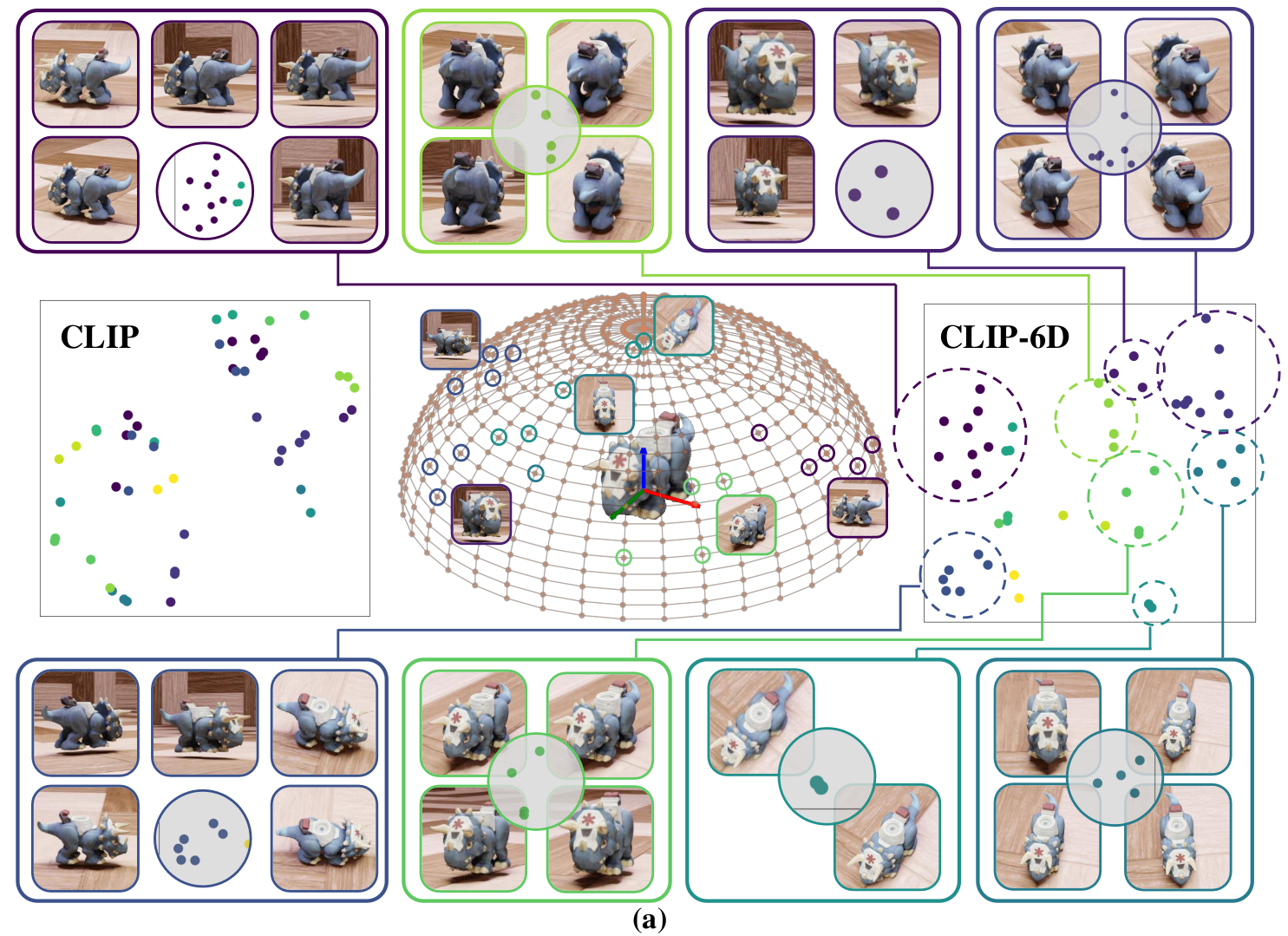
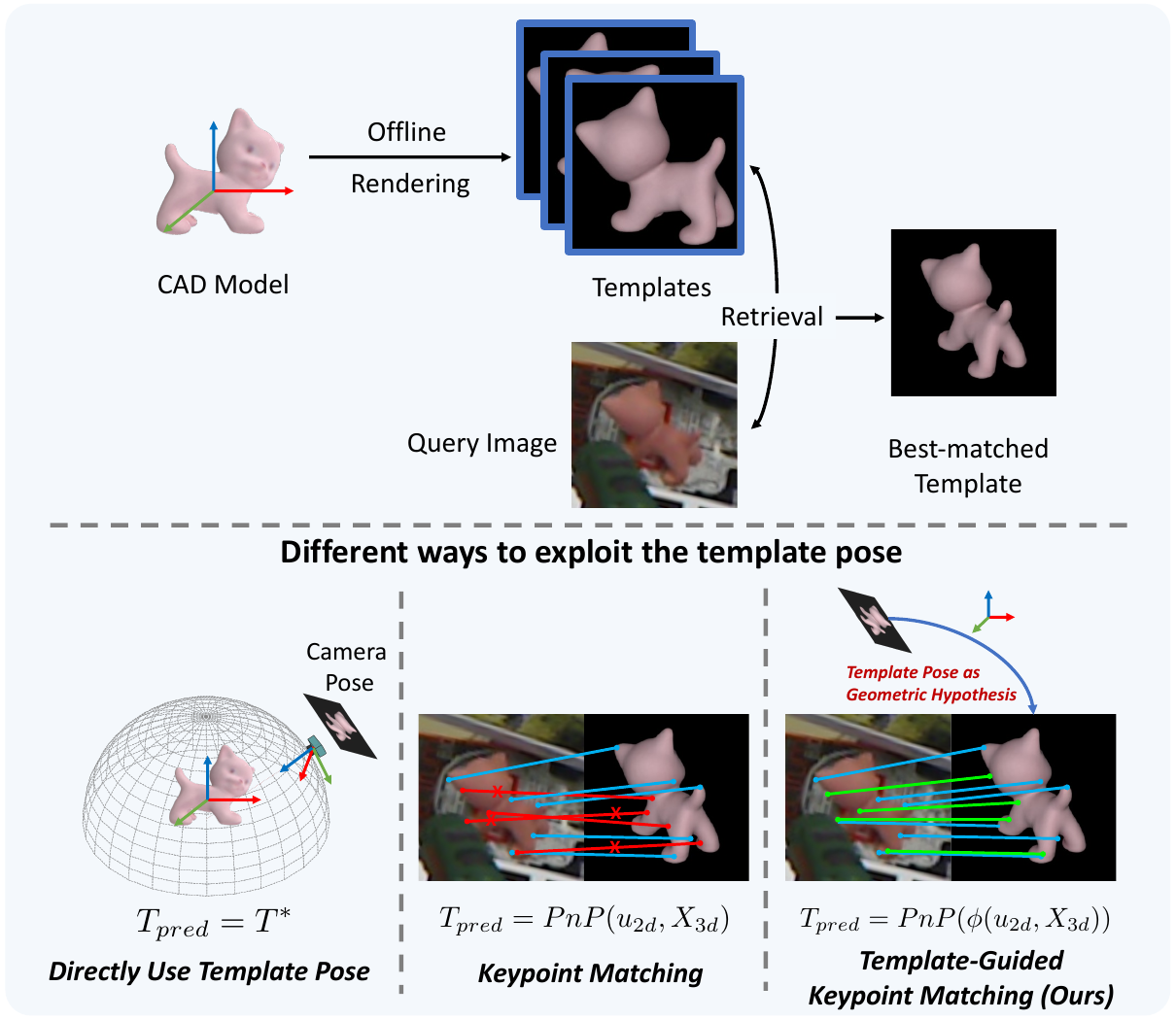
HypoPose motivation diagram showing CAD-rendered templates and template-pose-guided correspondence matching

HypoPose: Template-Guided Geometric Hypothesis Modeling for Training-Free Unseen 6D Pose Estimation

Training-free pose estimation for unseen objects using RGB images and CAD-rendered templates. Template poses guide geometric matching, reaching 46.2% mean Average Recall across seven BOP datasets.

My contribution: contributed to the design of the proposed method, prepared figures illustrating its key ideas, and refined the manuscript’s technical content and presentation.

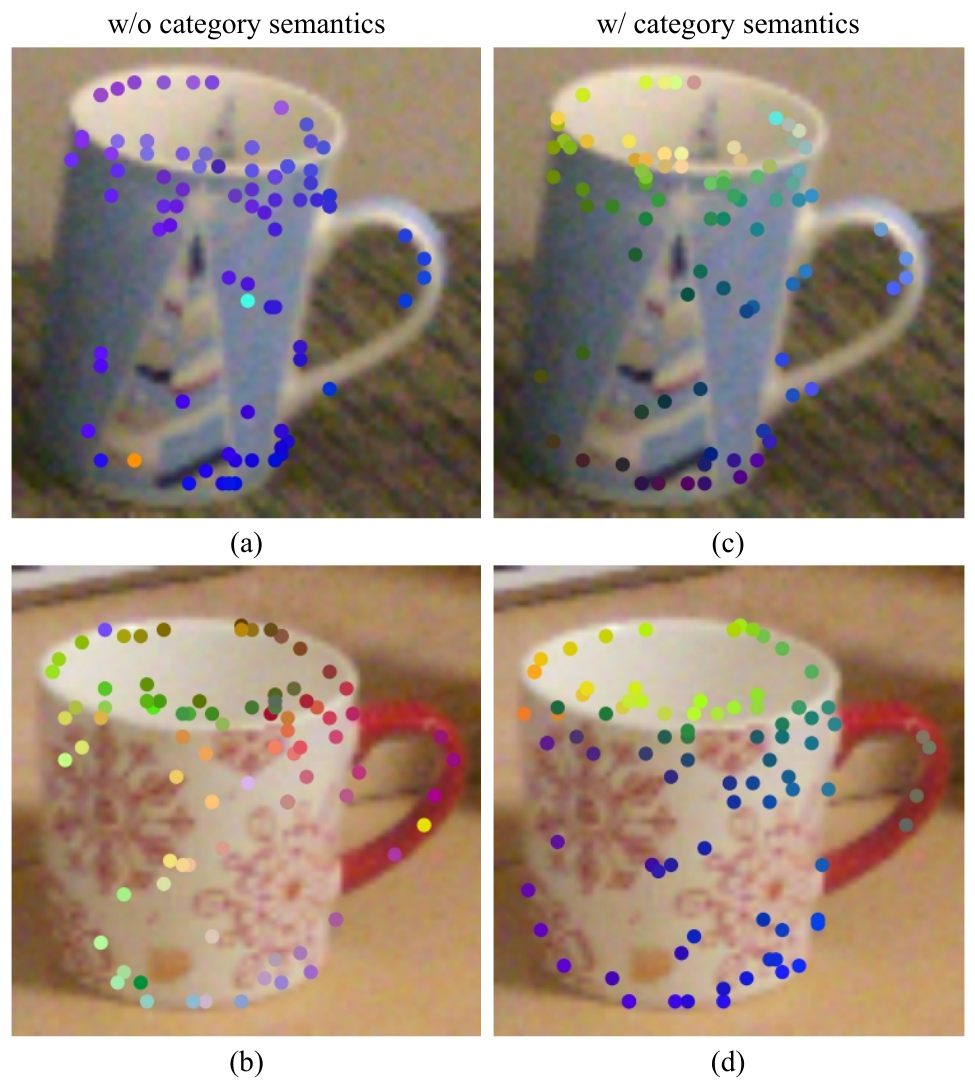
RCSPose comparison of learned point features on mugs with and without category semantics

RCSPose: Revisiting Category Semantics in Category-Level 6D Object Pose Estimation

Estimating pose and size for new instances of known categories from RGB-D, using category-guided semantic and geometric features. Reaches 60.6% mAP at 5° / 2 cm on REAL275.

My contribution: contributed to defining the research motivation, carrying out ablation experiments, and refining the manuscript’s technical explanations and overall presentation.

Ongoing research

Engineering projects

All project pages
G1 in a generated UE scene. Kinematic animation, shown at its original speed.

Language-guided 3D simulation & synthetic data

Independently architected and implemented an LLM-assisted Blender–Unreal Engine pipeline for physics-validated scenes, RGB-D images, instance masks, calibrated cameras, and object 6D pose annotations.

Earlier controlled Phase 5B batch: 50/50 scenes, 1,000 annotated frames, six object categories. See the project page for the latest research progress.

Real-robot bottle grasping with scripted control (default playback: 1.5×).

Detection-guided bottle grasping

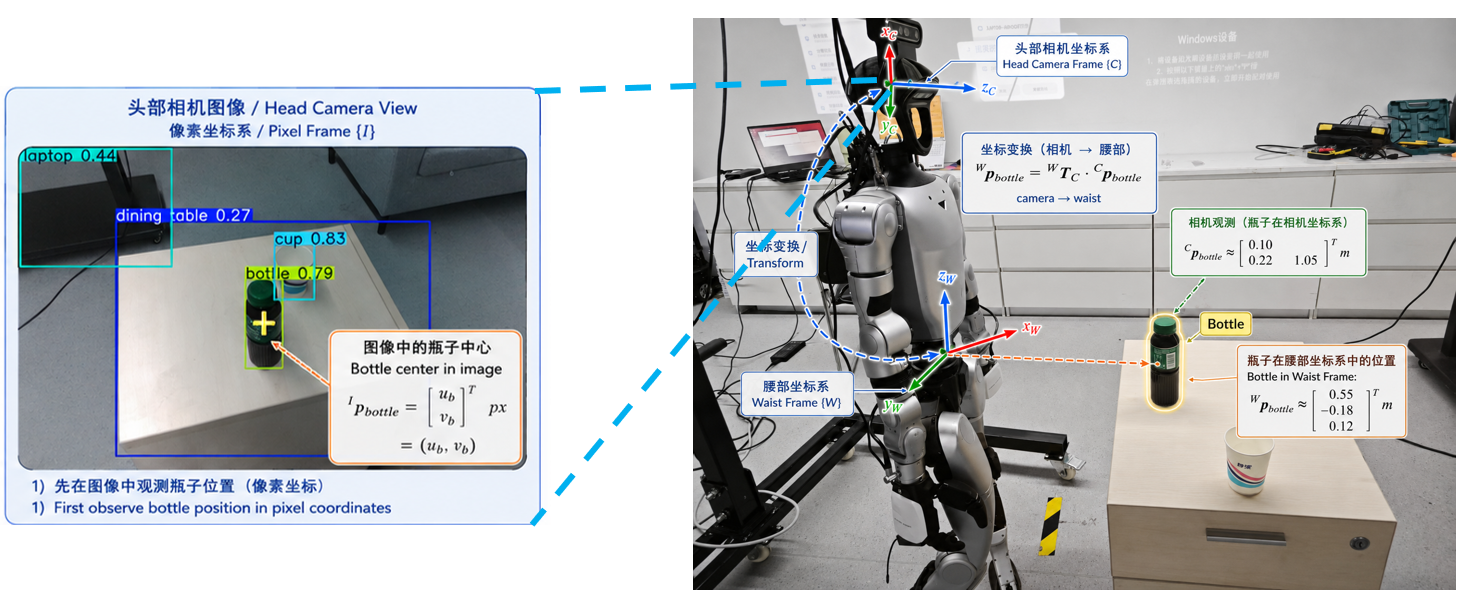
Integrated RGB-D perception and scripted grasping on a Unitree G1-EDU with an Inspire RH56E2 hand.

  • Perception: YOLO-World + RGB-D turn detections into 3D arm targets.
  • Grasp refinement: staged finger closure resolves interference; force/current feedback stops the approach on contact.
Head-camera bottle detection linked to the camera and waist coordinate frames on the G1 robot
From image pixels to a 3D arm target.
Hand motion

Box placement: a reported ~47% reduction in routine time.

Education

2023 – June 2028
(expected)
Peking University emblem
Peking University

Ph.D. in Computer Science and Technology
School of Computer Science

2019 – 2023
Hebei University of Technology emblem
Hebei University of Technology

Intelligent Science and Technology
School of Artificial Intelligence and Data Science

Selected Honors & Awards

  • Finalist (Top 2%), COMAP MCM/ICM Mathematical Modeling Competition · Team Leader
  • National Scholarship, China
  • National Second Prize, Contemporary Undergraduate Mathematical Contest in Modeling · Team Leader
  • National First Prize, National Undergraduate Life Science Competition (Entrepreneurship Track)
  • National Second Prize, National Undergraduate Biomedical Engineering Innovation Design Competition
  • Third Prize, National English Competition for College Students (NECCS)
  • Outstanding Student Leader (University-Level), Hebei University of Technology